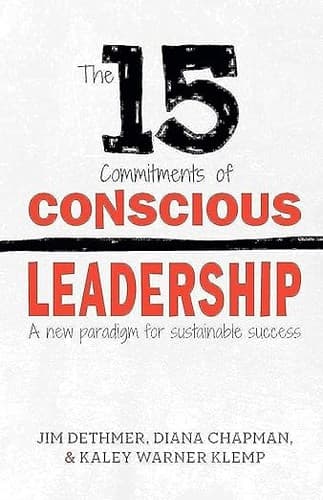
The 15 Commitments of Conscious Leadership
by Jim Dethmer, Diana Chapman & Kaley Klemp
A deep dive into self-aware, emotionally intelligent leadership — ideal for managers who want to lead with integrity in complex hierarchical environments.
Most leadership books tell you what to do. The 15 Commitments of Conscious Leadership by Jim Dethmer, Diana Chapman, and Kaley Klemp asks you something far more challenging: who are you being while you lead? This is not a book about strategy, delegation, or productivity. It is a book about self-awareness, emotional intelligence, and the internal shifts that separate reactive managers from truly conscious leaders.
Above the Line vs. Below the Line
The book's foundational concept is elegantly simple. At any given moment, you are leading either "above the line" or "below the line."
Below the line, you are defensive, reactive, and driven by fear. You blame others, hoard information, resist feedback, and operate from a scarcity mindset. Most leaders spend the vast majority of their time here without realising it.
Above the line, you are open, curious, and committed to learning. You take radical responsibility, welcome feedback, and approach challenges with genuine curiosity rather than defensiveness. The shift from below to above is not about positive thinking — it is about honest self-awareness.
The authors are clear: the first step is simply noticing where you are. You cannot shift above the line if you do not recognise that you are below it. This awareness practice is the foundation on which all fifteen commitments rest.
Radical Responsibility
The first commitment — taking radical responsibility — is perhaps the most powerful and the most difficult. It means that you stop blaming external circumstances for your experience. Your team missed a deadline? Before pointing fingers, ask: what role did I play? Did I set clear expectations? Did I provide the resources needed? Did I check in at the right moments?
In the Indian hierarchical workplace, this commitment is counter-cultural. The default in many organisations is to escalate blame upward or deflect it downward. Conscious leadership asks you to own your part first. This is not about accepting blame for everything — it is about recognising your agency in every situation.
Emotional Awareness
Several commitments deal directly with emotions — feeling them fully, expressing them responsibly, and not letting them drive unconscious behaviour. The authors argue that most leaders suppress emotions at work, treating feelings as unprofessional distractions. The cost is enormous: suppressed anger becomes passive aggression, unacknowledged fear becomes micromanagement, and hidden sadness becomes disengagement.
For Indian professionals raised in a culture that often equates emotional expression with weakness — especially in corporate settings — this section is both uncomfortable and liberating. The book does not ask you to become emotional at work. It asks you to become emotionally aware, so your feelings inform your leadership rather than hijack it.
The Indian Hierarchical Context
Indian organisations frequently operate with deep hierarchical structures where questioning authority is uncommon and speaking truth to power feels risky. The 15 Commitments framework offers tools for leaders at every level to create environments where candour is safe and curiosity is valued.
Commitment 4 — speaking candidly — and Commitment 5 — eliminating gossip — are particularly relevant. In organisations where back-channel conversations and political manoeuvring are common, these commitments offer a radical alternative: say what you mean directly to the person who needs to hear it.
For senior managers and executives in Indian companies, the book provides a vocabulary for the kind of leadership that builds genuine trust, not just compliance. When a VP commits to curiosity over defensiveness in a cross-functional meeting, it changes the entire dynamic. People start speaking up. Innovation follows.
Who Should Read This
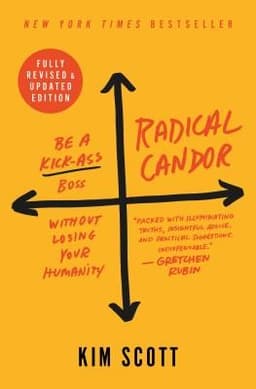
This book is best suited for experienced managers and senior leaders who have already mastered the basics of management and are looking for deeper personal growth. If you are a first-time manager, start with Radical Candor or The 5 Levels of Leadership. Come back to this one when you are ready to examine your own emotional patterns, blind spots, and unconscious leadership habits.
The writing is clear and practical, with each commitment accompanied by concrete practices. The price point is higher than most leadership books on the Indian market, but the depth of content justifies it.
Final Verdict
The 15 Commitments of Conscious Leadership is one of the most honest and demanding leadership books available. It does not offer quick wins or easy frameworks. It offers a mirror — and the courage to look into it.
Rating: 4.4/5 — A profound read for leaders ready to do the inner work that great leadership demands.