21 Sutras of Leadership
by Devdutt Pattanaik
Devdutt Pattanaik distils Indian mythology and ancient wisdom into 21 timeless leadership principles that speak directly to the modern Indian professional.
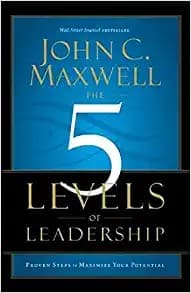
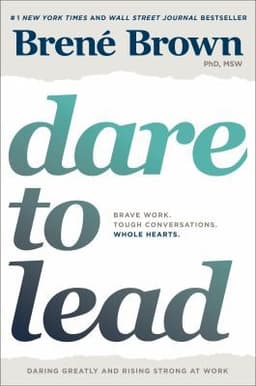
Walk into any bookshop in India and the leadership section is dominated by Western authors — Maxwell, Covey, Sinek, Brown. Their insights are valuable, but they emerge from a cultural context that prizes individual achievement, linear thinking, and measurable outcomes. Devdutt Pattanaik's 21 Sutras of Leadership offers something different: a leadership philosophy rooted in Indian mythology, dharmic principles, and the cyclical worldview that has shaped the subcontinent for millennia. For Indian professionals, this is not just another leadership book. It is a homecoming.
Leadership Through Mythology
Pattanaik does not present leadership as a set of techniques to be mastered. Instead, he draws on stories from the Ramayana, Mahabharata, Puranas, and Jain and Buddhist traditions to illuminate leadership truths that have been understood in India for centuries but rarely articulated in corporate language.
Each sutra is anchored in a mythological story and then connected to a modern workplace challenge. The result is a book that feels both ancient and urgently contemporary. When Pattanaik discusses how Ram led through adherence to rules while Krishna led through adaptive wisdom, he is really discussing the tension between process-driven and people-driven leadership — a tension that plays out in every Indian organisation.
Dharmic Decision-Making
One of the book's most profound contributions is its exploration of dharma as a leadership principle. In Western leadership literature, decision-making is typically framed around goals, stakeholders, and ROI. Pattanaik introduces a richer framework: what is the right thing to do, not just the profitable thing? And he acknowledges that "right" is contextual — it depends on your role (svadharma), the situation, and the web of relationships you operate within.
This framework resonates deeply with Indian professionals who often navigate complex webs of obligation — to their organisation, their team, their family, and their community. Western leadership books rarely address this multiplicity of duty. Pattanaik names it, honours it, and offers mythological precedents for navigating it wisely.
The Guru-Shishya Dynamic
Pattanaik devotes significant attention to the guru-shishya (teacher-student) relationship as a model for leadership. In Indian organisations, mentorship is often informal and deeply personal — a senior colleague who takes you under their wing, guides your career, and shapes your thinking. This is not the same as the formal coaching relationships described in Western management literature.
The book explores how great leaders in mythology — Dronacharya, Chanakya, Vidura — shaped their students not through instruction alone but through example, challenge, and sometimes deliberate provocation. For senior leaders in Indian companies, this section offers a culturally grounded framework for developing talent that goes beyond performance reviews and training programmes.
Cultural Roots of Indian Leadership
What makes this book unique is its insistence that Indian leadership has its own DNA. It does not need to be a copy of Western models adapted for Indian conditions. The Indian approach to leadership is inherently more relational, more contextual, and more comfortable with ambiguity than the linear, goal-oriented Western model.
Pattanaik discusses concepts like the difference between "jungle" (where might is right and there are no rules) and "garden" (where culture creates order) as metaphors for organisational design. He explores why Indian organisations often function more like families than machines, and why this is not a weakness to be fixed but a cultural strength to be understood and channelled.
Why This Book Is Unique
In a market saturated with translated Western wisdom, 21 Sutras of Leadership stands alone. It does not ask Indian readers to adopt foreign frameworks and make them fit. It says: your own tradition has profound leadership wisdom — let us rediscover it together.
This does not mean the book rejects Western ideas. Pattanaik frequently draws parallels between Indian and Western concepts, showing that many modern management theories echo insights that Indian mythology expressed centuries ago. But the cultural grounding makes the ideas stickier for Indian readers. When you already know the story of Arjuna's dilemma on the battlefield, Pattanaik's leadership lesson lands instantly.
Limitations
The book's mythological approach may not appeal to readers who prefer data-driven, research-backed arguments. Pattanaik's style is interpretive rather than empirical, and some readers may disagree with his readings of specific myths. The sutras are also presented as independent chapters, which means the book lacks the cumulative, building-block structure of books like The 7 Habits.
Final Verdict
21 Sutras of Leadership is essential reading for Indian professionals who want a leadership philosophy that speaks their cultural language. It is beautifully written, deeply thoughtful, and available at a price point that makes it accessible to everyone.
Rating: 4.3/5 — A culturally rooted leadership book that every Indian professional should have on their shelf.