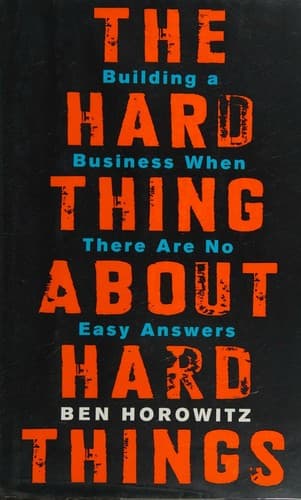
The Hard Thing About Hard Things
by Ben Horowitz
No management book prepares you for the struggles of building a company. Horowitz gives brutally honest advice on the real challenges founders face daily.
The Hard Thing About Hard Things by Ben Horowitz — The Book Nobody Wants to Need
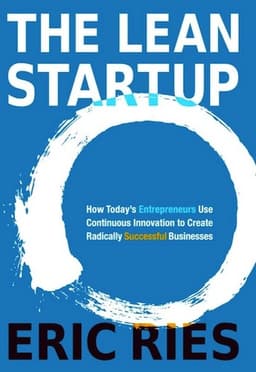
Most business books tell you how to do things right. Ben Horowitz wrote a book about what to do when things go horribly wrong. The Hard Thing About Hard Things is not a feel-good read. It is a survival guide for founders who are already in the trenches, dealing with problems that no MBA programme ever prepared them for. If The Lean Startup is the optimistic playbook, this book is the midnight phone call telling you the playbook just caught fire.
The Peacetime CEO vs. The Wartime CEO
One of Horowitz's most memorable frameworks is the distinction between peacetime and wartime leadership. A peacetime CEO operates when the company has a clear advantage over competitors and the market is growing. In peacetime, you focus on expanding the opportunity, building culture, and encouraging creativity. A wartime CEO operates when the company's survival is at stake — when you are running out of cash, losing key employees, or facing an existential competitive threat.
Most leadership advice is written for peacetime. Horowitz fills the gap by addressing wartime scenarios head-on. He argues that the same leader may need to switch between these modes, and that the skills required are almost opposite. Peacetime demands delegation and empowerment. Wartime demands decisive, sometimes uncomfortable, top-down decision-making.
For Indian startup founders, this distinction is particularly useful. The Indian market is volatile. Regulatory changes can upend a business model overnight. A new well-funded competitor can appear without warning. Currency fluctuations, GST revisions, policy shifts — any of these can push a company from peacetime into wartime in a matter of weeks. Knowing which mode you are operating in, and adjusting your leadership style accordingly, can mean the difference between survival and shutdown.
Managing Your Own Psychology
Horowitz is remarkably candid about the psychological toll of running a company. He describes sleepless nights, the loneliness of being the person everyone looks to for answers, and the paralysing weight of decisions that affect people's livelihoods. This honesty is rare in business literature, and it is what gives the book its emotional resonance.
He offers practical advice for staying sane: focus on the road, not the wall. Race car drivers are taught to look at where they want to go, not at the obstacle they are trying to avoid. Similarly, founders should spend their mental energy on solutions rather than catastrophising about problems.
Indian founders often carry additional psychological burdens. Family expectations, societal pressure to choose "safe" careers, and the stigma of failure in a culture that still celebrates job security over entrepreneurship — these are layers of stress that Horowitz does not directly address but that make his advice on psychological resilience even more relevant in an Indian context.
Making Hard Decisions
The book shines brightest when Horowitz discusses the decisions nobody wants to make. How do you lay off employees you personally hired? How do you demote a loyal executive who has simply outgrown their capability? How do you tell your board that you are going to miss the quarter — badly?
Horowitz does not offer easy answers because there are none. Instead, he provides principles. When you have to lay people off, do it in a single round. Do not drag it out with multiple small cuts that destroy morale. When you fire someone, take responsibility. Do not blame them for your hiring mistake. When delivering bad news, do it quickly and completely. People can handle hard truths far better than they can handle uncertainty.
These principles translate directly to the Indian business environment. Whether you are running a fifty-person startup in Hyderabad or managing a growing team in Pune, you will eventually face moments where the right decision is also the painful one. Having a framework for navigating those moments is invaluable.
Relevance to Indian Startup Founders
The Indian startup ecosystem has matured rapidly over the past decade, but much of the founder advice circulating in the ecosystem is still aspirational — focused on fundraising, growth hacking, and scaling. There is far less conversation about the messy, unglamorous work of actually managing a company through difficulty.
Horowitz's experience at Opsware, where he navigated a stock price that dropped to $0.35 per share before eventually selling the company for $1.6 billion, is a powerful case study in resilience. Indian founders who have watched their runway shrink to single-digit months will find genuine comfort and guidance in his story.
The chapters on hiring, culture, and organizational design are also directly applicable. Horowitz's advice on giving feedback — be direct, be specific, and do it regularly — challenges the indirect communication style that is common in many Indian workplaces. His argument is simple: people deserve to know where they stand, and ambiguity helps nobody.
Key Takeaways
- There is no recipe for hard decisions. But there are principles that help you make them less badly.
- Take care of the people, the products, and the profits — in that order.
- Hire for strength, not for lack of weakness. A candidate who is exceptional at one critical thing is better than one who is merely good at everything.
- Build a culture that is functional, not performative. Culture is what people do when you are not in the room.
- The struggle is the journey. Building a company is supposed to be hard.
Who Should Read This
This book is essential for founders who are past the idea stage and are actively running a company. If you have employees depending on you, if you have made a hire you regret, if you are losing sleep over a decision that has no good options — this is your book. It is less useful for people who are still in the dreaming-about-a-startup phase; you will appreciate it more once you have some battle scars.
Verdict
The Hard Thing About Hard Things is not the most polished business book you will read, and the hip-hop quotes that open each chapter may feel out of place for some readers. But beneath the rough edges lies the most honest account of entrepreneurial struggle available in print. For Indian founders navigating the particular complexities of building a company in this market, Horowitz's hard-won wisdom is worth every rupee.
Rating: 4.4 out of 5 — Raw, real, and indispensable for any founder who has tasted the struggle.