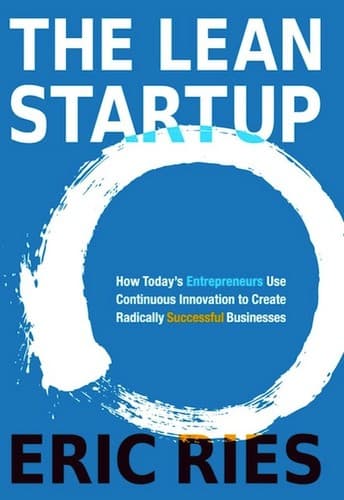
The Lean Startup
by Eric Ries
The methodology that changed how startups are built. Ries introduces validated learning, rapid experimentation, and the build-measure-learn loop that every founder needs.
The Lean Startup by Eric Ries — A Founder's Field Manual
If you have ever spent months perfecting a product only to discover that nobody actually wants it, Eric Ries wrote this book for you. The Lean Startup is not just another business book filled with motivational platitudes. It is a practical, evidence-driven framework for building companies under conditions of extreme uncertainty — which, let us be honest, describes every startup that has ever existed.
What the Book Teaches
At its core, The Lean Startup revolves around the Build-Measure-Learn feedback loop. Ries argues that the fundamental activity of a startup is to turn ideas into products, measure how customers respond, and then decide whether to pivot or persevere. The faster you can cycle through this loop, the better your chances of finding a sustainable business model before your money runs out.
The concept of the Minimum Viable Product (MVP) is central to this philosophy. Rather than spending a year building a fully-featured product, Ries encourages founders to ship the smallest possible version that lets you start learning from real customers. This might be a landing page, a concierge service, or even a simple video demonstration. The goal is not perfection — it is validated learning.
Validated learning is perhaps the most important idea in the entire book. Ries distinguishes between vanity metrics (page views, total sign-ups) and actionable metrics that actually tell you whether your business hypothesis is correct. He provides concrete tools like cohort analysis and split testing to help founders measure what matters.
The pivot or persevere decision is where the rubber meets the road. Ries offers a structured approach to deciding when your current strategy is working and when you need to change direction. A pivot is not failure — it is a course correction grounded in evidence rather than ego.
Why Indian Entrepreneurs Should Pay Attention
This book resonates deeply with the Indian startup ecosystem for several reasons. First, capital efficiency is not optional for most Indian founders. Unlike Silicon Valley, where venture capital flows freely, many Indian entrepreneurs bootstrap their companies or operate with limited seed funding. The lean methodology's emphasis on doing more with less aligns naturally with the Indian instinct for frugal innovation.
There is a fascinating parallel between the Lean Startup philosophy and the Indian concept of Jugaad — the art of resourceful improvisation. However, Ries adds something that Jugaad often lacks: systematic rigour. The lean approach takes that scrappy, make-it-work mentality and wraps it in a disciplined framework of hypothesis testing and measurement. For Indian founders, this combination is powerful. You keep the resourcefulness that is already in your DNA while adding a scientific method to channel it productively.
Consider the Indian market's diversity. A product that works in Bengaluru may fail in Lucknow. The lean approach of rapid experimentation lets founders test assumptions across different customer segments, languages, and price points without committing massive resources upfront. Companies like Ola and Swiggy, whether they used the terminology or not, essentially followed lean principles by launching in limited geographies, learning aggressively, and then scaling what worked.
Key Takeaways
- Start small, learn fast. Your first product should embarrass you slightly. If it does not, you launched too late.
- Measure what matters. Revenue per cohort beats total downloads every single day.
- Pivot with purpose. Changing direction is not admitting defeat; it is responding to evidence.
- Innovation accounting helps you track progress even when traditional financial metrics are not yet meaningful.
- Sustainable growth comes from one of three engines: sticky, viral, or paid. Understand which one drives your business.
Who Should Read This
If you are a first-time founder, this book is practically mandatory. It will save you from the most common mistake in entrepreneurship: building something nobody wants. Product managers at established companies will also benefit, especially those working on new initiatives where uncertainty is high. Even if you are a student thinking about entrepreneurship, reading this book early will shape how you approach problem-solving and risk.
That said, experienced founders who have already shipped multiple products may find some of the concepts basic. The book is best suited for people in the early stages of their entrepreneurial journey.
Verdict
The Lean Startup is one of those rare business books that delivers genuine, actionable value. It does not promise overnight success or reveal a secret formula. Instead, it gives you a reliable process for navigating uncertainty. For Indian entrepreneurs operating in a market that rewards both creativity and discipline, this book belongs on the top shelf. At under 400 rupees, it is probably the highest-return investment you will make this year.
Rating: 4.5 out of 5 — Essential reading for any founder serious about building something that lasts.