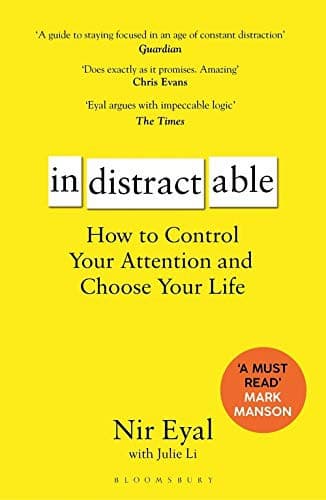
Indistractable
by Nir Eyal
Nir Eyal's 'Indistractable' offers a science-backed framework for managing digital distraction that feels tailor-made for Indian professionals navigating noisy offices, relentless WhatsApp pings, and the chaos of WFH life. A practical, honest guide that goes beyond just blaming your phone.
Sound Familiar?
It's 10 AM. You sat down to finish that project report an hour ago. Somehow you've replied to 14 WhatsApp messages, watched a couple of Instagram reels, attended an unplanned Slack huddle, and answered two emails that could have waited until tomorrow. The report? Still staring back at you, untouched.
If that sounds like your average Tuesday, this Indistractable book review is for you — and so is Nir Eyal's book.
What the Book Is Really About
Most books about distraction are extended lectures telling you to delete your apps and buy a dumb phone. Indistractable takes a more honest approach. Eyal's central argument is that distraction isn't caused by technology — it's caused by discomfort. We reach for our phones not because apps are evil, but because we're trying to escape boredom, anxiety, or the friction of hard work. Tackle the root cause, and the phone stops being the enemy.
The book builds a four-part framework: manage internal triggers, make time for traction, hack back external triggers, and use pacts to prevent distraction. Simple in theory, surprisingly nuanced in practice.
Key Insights Worth Your Time
Distraction begins from within. What struck me most is Eyal's willingness to turn the finger inward. He calls the discomfort that drives us toward distraction "internal triggers" — loneliness, uncertainty, or the low-grade anxiety of an overflowing inbox. He suggests a technique called "surfing the urge," where you observe the impulse to open Instagram without acting on it. It sounds almost meditative, but it genuinely interrupts the automatic loop.
Schedule everything, including leisure. Eyal introduces the "timeboxed calendar" — blocking time not just for work tasks but for family, rest, and yes, even mindless scrolling. The logic is compelling: if leisure is planned, you won't feel guilty about it, and you won't use it as an escape from work. For Indian professionals who blur work-life boundaries constantly — especially post-pandemic WFH — this feels like actual permission to switch off.
Pacts as commitment devices. The book's most practical tool is the concept of pacts — pre-commitments that make distraction harder. Website blockers, phone-free meeting rooms, telling a colleague you'll share output by noon. Eyal frames these as the "last line of defense," not the first. They work best after you've done the inner work — which is an important and often missed distinction.
How It Compares to Other Productivity Books
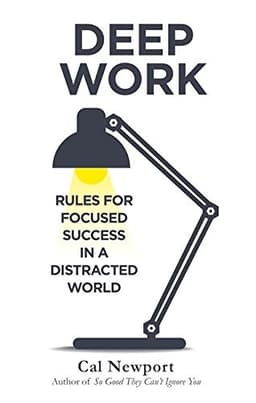
Unlike Cal Newport's Deep Work — brilliant, but at times monastic and impractical for people with kids, commutes, and constant team pings — Indistractable is designed for the messy real world. Eyal acknowledges that most of us cannot disappear into a distraction-free cabin for four hours a day.
It also refreshingly avoids tech-shaming. Eyal has worked in Silicon Valley and understands that apps are engineered to capture attention. Rather than demonise them, he gives you tools to set the terms of engagement on your own terms.
The Indian WFH Context
The digital distraction problem hits differently here. Open-plan offices in Bengaluru and Mumbai are noisy by default. Family obligations don't pause at 9 AM. WFH often means working from the same room where your children are studying or your parents have the TV on. Eyal's framework — particularly timeboxing and pacts — translates well to these realities.
Blocking 90 minutes of deep work in the early morning before the household wakes up, for instance, is one of the most effective applications of his method for Indian professionals juggling work and home in the same physical space. The book's examples lean American, but the underlying psychology is universal. The principles transfer cleanly.
Who Should Read This?
This book is ideal for Indian knowledge workers — software engineers, marketing managers, consultants, analysts — anyone whose output depends on sustained thinking but whose day is fragmented by Slack, Teams, email, and the ever-present family group chat.
If you're after deep philosophy or cutting-edge neuroscience, you might find the book a little light. It's accessible by design, which is a feature, not a flaw. Think of it as the productivity book you'll actually finish.
Final Verdict
Indistractable doesn't promise to fix your focus problem overnight. What it does offer is an honest, structured, and surprisingly compassionate way to start — one that respects the complexity of real working life rather than asking you to become a monk.
Compare prices below — this is one of those books you'll likely finish over a weekend and keep returning to for months.
Rating: 4.3/5 — A grounded, practical guide to reclaiming focus in a world engineered to steal it.