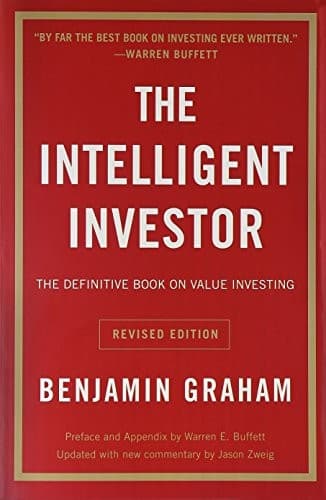
The Intelligent Investor
by Benjamin Graham
Warren Buffett calls this the best book on investing ever written. Graham's principles of value investing are the foundation every serious investor needs.
The Intelligent Investor by Benjamin Graham — The Foundation Every Indian Investor Needs
When Warren Buffett says a book changed his life, you pay attention. The Intelligent Investor by Benjamin Graham, first published in 1949, is that book. Buffett read it at age 19 and has called it "by far the best book on investing ever written." Nearly eight decades later, Graham's principles remain the bedrock upon which serious investing is built. For Indian investors navigating the Sensex, Nifty, and the growing universe of direct equity and mutual funds, this book is not just recommended reading — it is essential.
The Defensive Investor and the Enterprising Investor
Graham divides investors into two categories. The defensive investor wants safety, minimal effort, and adequate returns. The enterprising investor is willing to put in time and effort for potentially superior returns. The critical insight is that both approaches are valid, but mixing them is dangerous. The worst thing you can do is be a defensive investor who occasionally tries to be enterprising — buying a "hot tip" stock without doing the research, or timing the market because a YouTube channel told you to.
For most Indian retail investors — salaried professionals with full-time jobs, families, and limited time for stock research — Graham would unambiguously recommend the defensive approach. This means a diversified portfolio of large-cap index funds and high-quality debt instruments, rebalanced periodically, and held for the long term. It is not exciting. It will not make you the star of your office WhatsApp group. But it works, and it has worked for nearly a century.
Mr. Market: The Most Powerful Metaphor in Finance
Graham's most enduring contribution to investing is the allegory of Mr. Market. Imagine you own a share in a business with a partner named Mr. Market. Every day, Mr. Market shows up at your door and offers to buy your share or sell you his, at a price he names. Some days he is wildly optimistic and offers an absurdly high price. Other days he is depressed and offers far below what the business is worth. The key insight: you are under no obligation to trade with him. You can simply say no and wait.
This metaphor is extraordinarily relevant for Indian investors who watch the Sensex ticker on their phones all day. When the market crashed 3,000 points in March 2020, Mr. Market was in a panic. Investors who understood Graham sold nothing. Those who did not sold at the bottom and watched the market recover to all-time highs within 18 months. When the market soared past 60,000 in late 2021 on the back of frothy IPOs and meme stocks, Mr. Market was euphoric. Graham would have told you to be cautious. He was right — the correction that followed proved it.
Margin of Safety: The Three Most Important Words in Investing
If there is one concept from this book that you should tattoo on your forearm, it is "margin of safety." Graham argues that the intelligent investor should only buy a stock when its market price is significantly below its intrinsic value. This gap — the margin of safety — protects you from errors in judgment, unforeseen events, and the general unpredictability of markets.
In the Indian context, this principle would have saved investors from some of the most spectacular wealth destruction events of the past decade. Investors who bought Paytm at its IPO price of 2,150 rupees ignored the margin of safety entirely — the company was unprofitable, with no clear path to profitability, priced at a valuation that assumed everything would go right. The stock crashed to under 500 within a year. Similarly, the Yes Bank saga, the DHFL collapse, and the Adani short-seller crisis all reinforced the same lesson: when you overpay for a stock, you have no margin of safety, and any negative surprise can destroy your capital.
Applying Graham in the Indian Market
While Graham wrote for the American market of the mid-20th century, his principles translate remarkably well to India today. Indian markets have matured significantly — SEBI regulations are robust, corporate governance is improving (though still imperfect), and retail investor participation has exploded with platforms like Zerodha, Groww, and Kite making it easy to invest directly.
However, this ease of access has also brought danger. It has never been simpler for a 22-year-old in Pune to buy F&O contracts with borrowed money and lose their savings in an afternoon. Graham would be horrified. His entire philosophy is built on the distinction between investing and speculation. Investing involves thorough analysis, safety of principal, and adequate returns. Everything else is speculation. The SEBI data showing that over 90% of F&O traders lose money is Graham's thesis, validated with Indian data.
For Indian readers, the most actionable takeaway is this: use Graham's framework to resist the noise. Ignore the business news channels screaming about intraday targets. Ignore the Telegram groups promising multi-bagger tips. Instead, focus on buying quality businesses at reasonable prices — or better yet, buy a Nifty 50 index fund and let the market's long-term growth do the work. Graham would approve.
The Bottom Line
The Intelligent Investor is not an easy read. It is dense, sometimes dry, and the examples from 1949 can feel distant. The revised edition with commentary by Jason Zweig helps enormously, updating every chapter with modern examples and context. But the effort is worth it. This book will not give you stock tips. It will give you something far more valuable — a framework for thinking about investing that will protect your capital for the rest of your life. In a country where financial literacy is still developing and the stock market is often treated as a casino, Graham's voice of discipline and patience is exactly what Indian investors need to hear.